
Non-Resident Landlord Scheme: A Guide for Letting Agents
The Letting Partnership ·
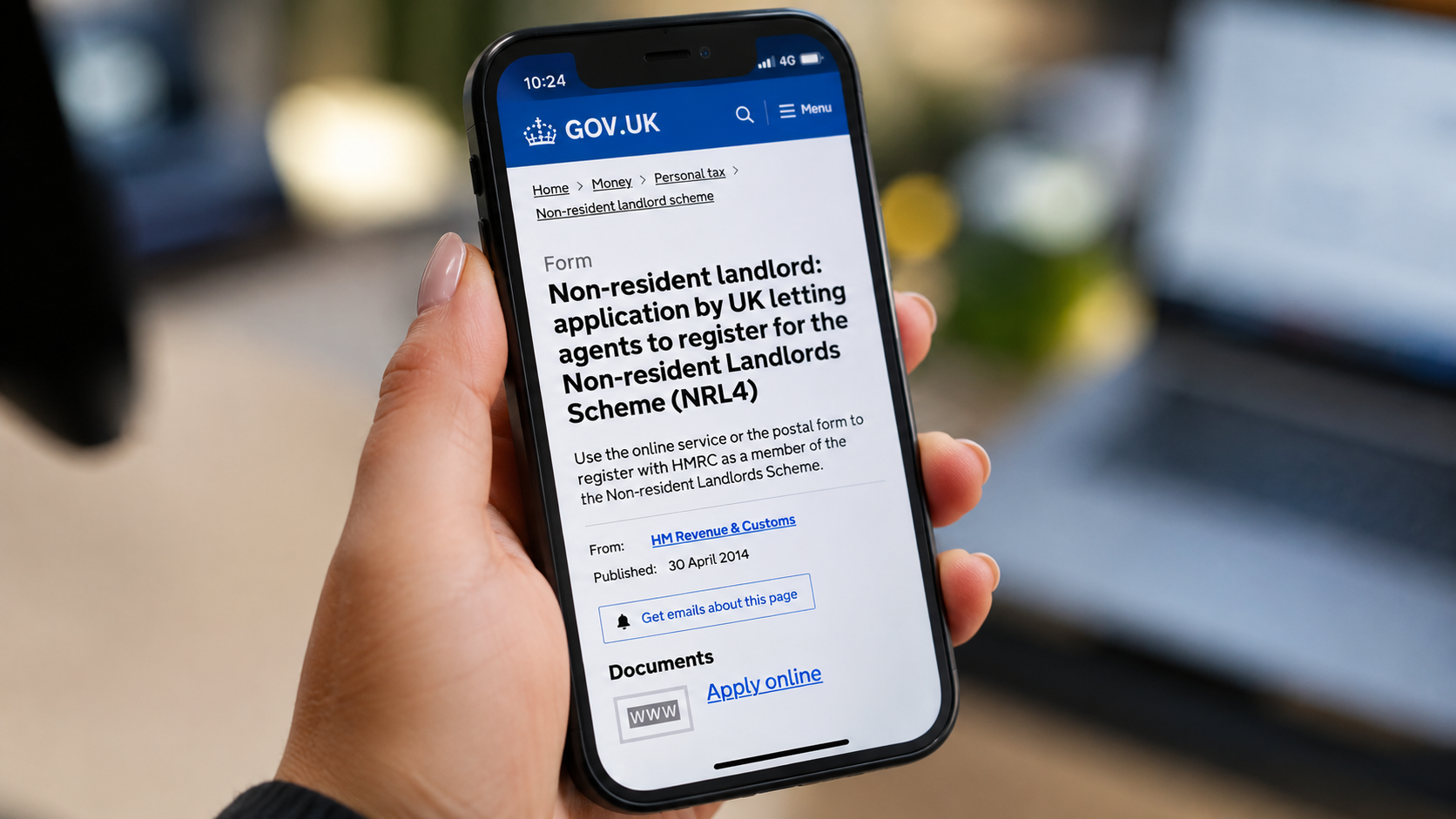
With the latest Non-Resident Landlord (NRL) Scheme quarterly reporting deadline behind us, now is a good opportunity for letting agents to review their processes and ensure they are prepared for the next reporting period.
Understanding the scheme is an important part of managing rental income on behalf of landlords who live overseas. However, knowing when the scheme applies, whether tax needs to be deducted and what information to collect from landlords can be challenging.
Being prepared from the outset can help letting agents avoid unnecessary administrative work, reporting errors and potential compliance issues.
What Is the Non-Resident Landlord Scheme?
The Non-Resident Landlord Scheme is operated by HMRC to collect tax on UK rental income received by landlords whose usual place of abode is outside the UK.
HMRC generally considers individuals who spend six months or more outside the UK to have a usual place of abode overseas for the purposes of the scheme.
Letting agents managing rental income on behalf of these landlords are generally responsible for deducting tax unless HMRC has authorised payment without deductions.
Do Letting Agents Need to Register for the NRL Scheme?
Letting agents must register with HMRC within 30 days of becoming responsible for operating the scheme. This applies even if all their non-resident landlords have approval to receive rental income without tax deductions.
At The Letting Partnership, we recommend registering in advance rather than waiting until a non-resident landlord joins your portfolio.
Registration is free and can be completed using the NRL4 registration form on the HMRC website.
Taking this proactive approach can help agents avoid unnecessary delays when onboarding new landlords.
Is Your Non-Resident Landlord Exempt from Tax Deductions?
One of the common issues we encounter when supporting letting agents is uncertainty around whether a landlord has been approved to receive rental income without tax deductions.
It is important to understand that approval to receive rental income in full does not necessarily mean that the landlord is exempt from UK tax.
Agents must have the relevant written HMRC authorisation before paying rental income without deductions. A landlord's assurance alone is not sufficient.
When a landlord changes letting agents, the new agent should also ensure they have the appropriate authorisation from HMRC.
Further information is available in HMRC's Non-Resident Landlord Scheme guidance for letting agents.
Are You Asking Your Landlords the Right Questions?
Identifying non-resident landlords should form part of an agency's onboarding process. However, it is equally important to remain aware of changes in existing landlords' circumstances.
Some useful questions to ask include:
Where do you currently live?
Are you planning to move overseas?
How long do you expect to live outside the UK?
Have you applied for HMRC approval to receive rental income without tax deductions?
Is the property jointly owned?
Have you informed HMRC of your change of letting agent?
Collecting this information early can help agents identify potential NRL obligations and establish whether further checks are required.
Landlords can find the relevant application forms on HMRC's Non-Resident Landlord forms page.
Understanding NRL Reporting Deadlines
Letting agents operating the scheme should be aware of the following quarterly deadlines:
| Reporting period | Submission and payment deadline |
|---|---|
| 1 April – 30 June | 30 July |
| 1 July – 30 September | 30 October |
| 1 October – 31 December | 30 January |
| 1 January – 31 March | 30 April |
Quarterly returns (NRLQ) are generally required when tax is payable, when a repayment is being claimed or when HMRC requests a return.
Agents operating the scheme must also submit an annual information return (NRLY) by 5 July, including information about landlords with approval to receive rent without deductions.
Where applicable, agents must also provide landlords with an NRL6 certificate of tax liability by 5 July.
The Importance of Accurate Record-Keeping
Maintaining accurate financial records throughout the year is essential for meeting NRL obligations.
Agents should retain records of rental receipts, relevant expenses, supporting documentation and correspondence regarding landlords' residency circumstances.
Incorrect returns, missed deadlines and failures to deduct tax when required can have financial consequences for letting agents.
Reviewing records throughout the quarter, rather than waiting until the reporting deadline, can help identify discrepancies early.
For further information, refer to HMRC's record-keeping requirements for the Non-Resident Landlord Scheme.
Being Prepared for Non-Resident Landlords
At The Letting Partnership, we regularly support letting agents who are unsure whether the NRL Scheme applies to landlords within their portfolios or whether tax deductions are required.
Through our outsourced client accounting service, we help identify potential NRL obligations and support agents in managing the associated financial administration.
Our recommendation is simple: register early, ask the right questions and ensure your financial records are accurate and up to date.
Being prepared before a non-resident landlord joins your portfolio can save valuable time, reduce unnecessary administrative pressures and help your agency manage its responsibilities with greater confidence.
Find out how The Letting Partnership can support your agency with client accounting and compliance.