
How to Send Bank Details Safely: A Guide for 2026
Chloe Grima ·
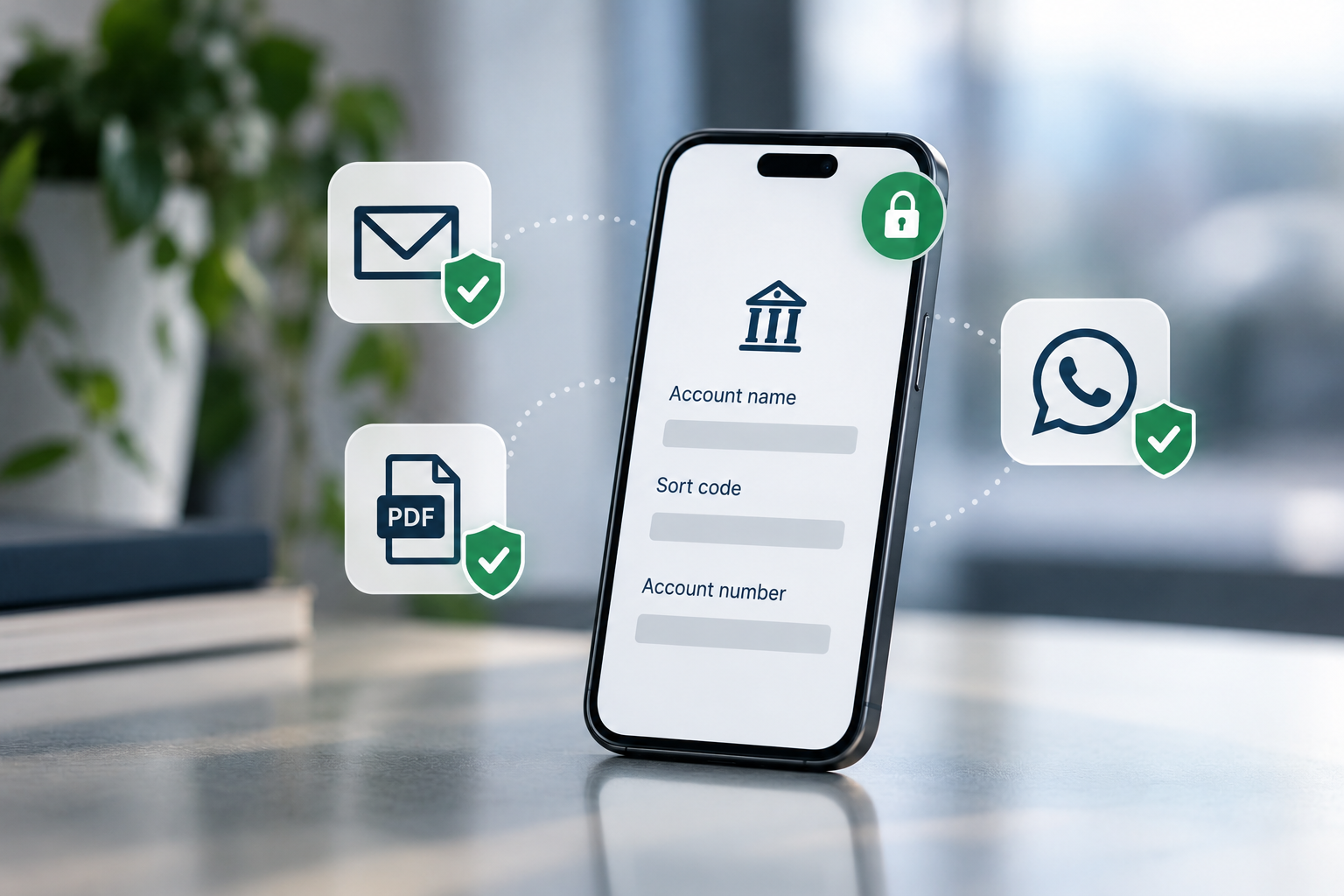
Sharing bank details is a common part of everyday financial transactions. However, sending sensitive financial information through unsecured channels can expose individuals and businesses to fraud, identity theft and financial loss.
With phishing and impersonation scams continuing to pose risks in 2026, understanding how to share bank details securely is essential.
Verifying the recipient is often just as important as encrypting the information. Even secure communication methods cannot prevent fraud if sensitive details are shared with someone impersonating a trusted contact.
Is It Safe to Send Bank Details by Email?
Sending bank details through standard, unencrypted email is not recommended. Email accounts can be compromised, messages may reach the wrong recipient, and fraudsters can impersonate legitimate contacts to obtain financial information.
A common example is payment diversion fraud, where criminals impersonate a trusted individual or business and request that payments be redirected to a fraudulent bank account. These scams can result in losses of thousands of pounds.
The UK's National Cyber Security Centre (NCSC) recommends protecting email accounts with strong, unique passwords and two-step verification, or passkeys where available.
If email must be used, ensure sensitive information is appropriately protected and independently verify the recipient's identity. Before sharing bank details or making a payment, verify any unexpected request using a telephone number you already know to be genuine. Never rely solely on contact details provided in a suspicious message.
Is It Safe to Send Bank Details via WhatsApp?
WhatsApp uses end-to-end encryption to protect messages between users. However, encryption does not prevent impersonation scams or protect against compromised accounts.
Fraudsters may pose as trusted contacts or persuade individuals to disclose financial information.
Although WhatsApp messages are encrypted, this does not guarantee the recipient is genuine. Always independently verify unexpected requests involving bank details or payments, particularly if someone claims their bank details have changed.
To reduce these risks, confirm the recipient's identity, enable two-step verification and remain cautious of unexpected financial requests. For businesses handling client money, approved secure communication platforms are generally preferable.
What Is the Safest Way to Send Bank Details to Someone?
For most UK bank transfers, an account name, sort code and account number are sufficient for someone to send you money. These details do not normally provide direct access to online banking, but they should still be handled carefully.
Recommended methods for sharing bank details safely include:
Secure platforms: Use trusted banking apps, encrypted messaging services or secure document-sharing portals.
Password-protected documents: Protect files containing bank details with a strong, unique password and share it separately through a trusted communication channel.
Independent verification: Confirm unexpected changes to payment instructions using a trusted telephone number or separate communication channel.
Confirmation of Payee: When making UK bank transfers, check that the account name matches the intended recipient. Remember that a matching name does not guarantee a payment is safe.
Never share banking passwords, PINs or security codes.
What Happens If You Send Bank Details to a Scammer?
Sharing bank details with a fraudster does not automatically mean they can access your money. However, the consequences depend on the information disclosed.
Potential risks include:
Account number and sort code: These details alone do not normally allow someone to access your online banking or make bank transfers. However, criminals could attempt Direct Debit fraud or use them in further scams. Unauthorised Direct Debit collections are generally covered by the Direct Debit Guarantee.
Bank statements and personal information: These may be exploited for identity theft or impersonation.
Passwords, PINs and security codes: Sharing these could allow fraudsters to access your accounts and steal money.
Fraudulent bank transfers: Being tricked into transferring money to a scammer could result in losses of hundreds or thousands of pounds.
According to the UK's Payment Systems Regulator (PSR), eligible individuals, microenterprises and certain charities who fall victim to authorised push payment (APP) scams may be reimbursed up to £85,000 under rules introduced on 7 October 2024.
These protections apply to qualifying UK Faster Payments and CHAPS transfers, subject to eligibility criteria and exclusions. Reimbursement is therefore not guaranteed in every case.
What Should You Do If You've Been Scammed?
If you believe your financial information has been compromised:
Contact your bank immediately to report the incident and secure your account.
Change compromised passwords and enable additional security measures.
Check your accounts for suspicious transactions.
Report the incident to Report Fraud in England, Wales or Northern Ireland, or Police Scotland in Scotland.
Keep records of suspicious messages and transactions.
Acting quickly may help prevent further losses and improve the chances of recovering stolen funds.
Why Does This Matter for UK Letting Agents?
Letting agents regularly handle financial information when collecting rent, transferring landlord payments and managing client money.
A fraudulent request to change a landlord's bank details could result in rent being transferred to a criminal's account, potentially costing an agency thousands of pounds and damaging client trust.
Independent verification is therefore essential. Before updating payment instructions or transferring client money, letting agents should verify unexpected requests using contact details already held on record, rather than those supplied in the request itself.
At The Letting Partnership, we understand that protecting client money requires more than technology alone. Our experienced team handles your client accounting, from daily reconciliations to ongoing oversight, giving you peace of mind and more time to focus on growing your business.
For further guidance on the risks of sharing financial information, read our previous article, Sending Bank Details? Don't Get Caught Out, which explores the importance of protecting bank details from fraudsters.